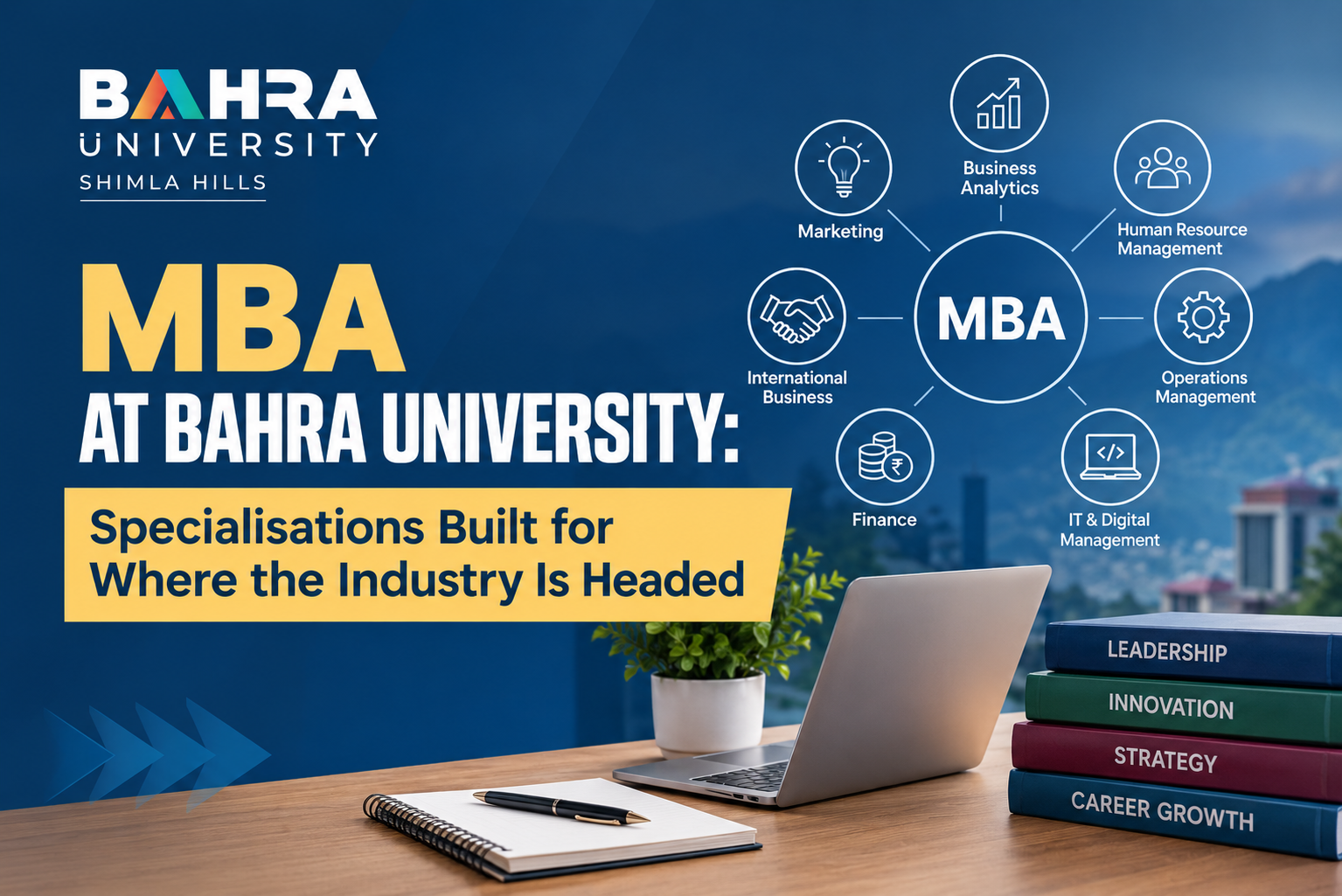
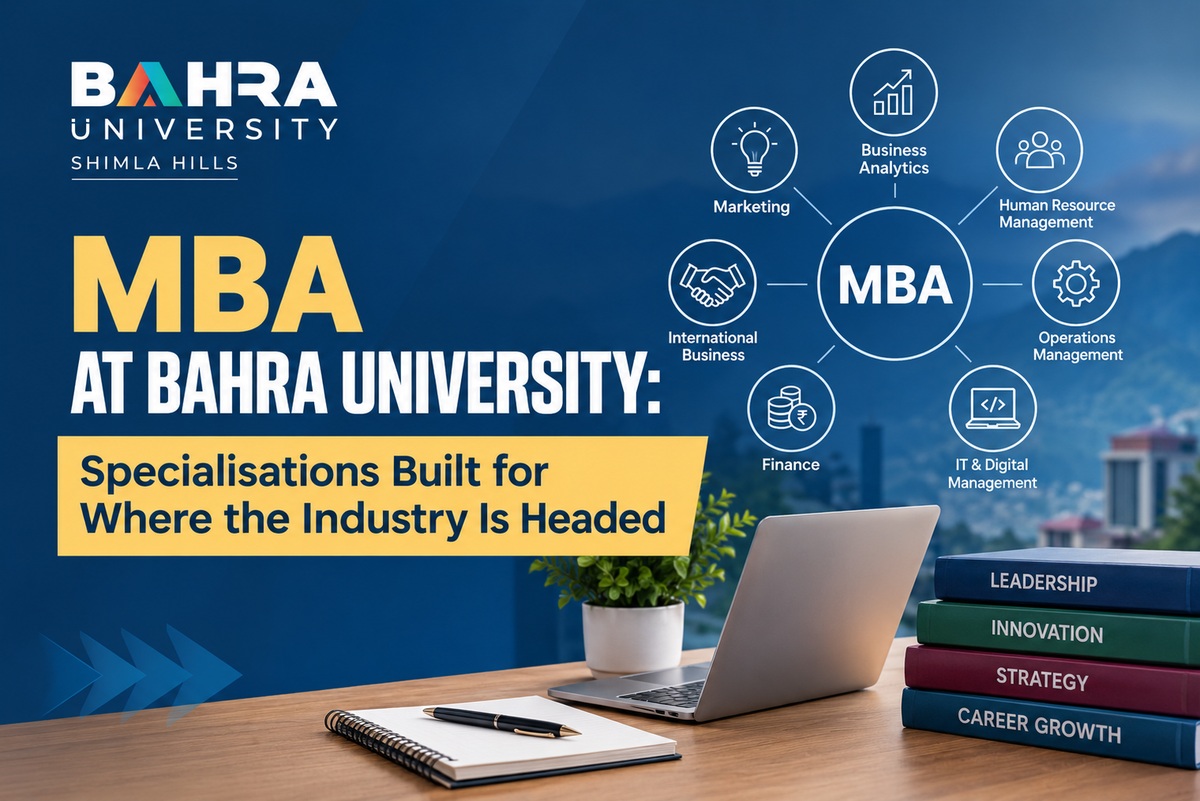
MBA at Bahra University: Specialisations Built for Where the Industry Is Headed
The business world is changing faster than ever. Artificial intelligence is influencing decisions, data is shaping strategies, digital platforms are transforming customer behaviour, and organisations are looking for professionals who can combine business understanding with technology, communication, and leadership.
This is why an MBA today needs to offer more than traditional lessons in marketing, finance, and human resources. Students need to understand how organisations operate in a digital economy, how to make decisions using data, how to lead diverse teams, and how to respond when industries change.
At Bahra University, the School of Management presents its MBA as a two-year programme designed around corporate needs, practical learning, industry interaction, seminars, networking, competitions, and immersive activities. The university states that its MBA curriculum is developed in consultation with corporates, including Indian and global multinational companies.
Why the Modern MBA Is Changing
An MBA remains a valuable qualification, but the expectations from management graduates have changed. Employers increasingly want candidates who can understand business problems, work with technology, communicate clearly, and make decisions in uncertain situations.
The World Economic Forum’s Future of Jobs Report 2025 identifies analytical thinking as the most sought-after core skill among employers. It also highlights resilience, flexibility, agility, leadership, social influence, AI, big data, networks, cybersecurity, and technological literacy as important capabilities for the coming years.
This means that a management graduate may need to understand both people and platforms. A marketing professional may use customer analytics and artificial intelligence. A finance manager may work with dashboards and automated reporting. An HR professional may use data to understand employee retention. An operations manager may depend on digital supply-chain systems.
The MBA, therefore, is becoming more interdisciplinary. Students are expected to develop a combination of business knowledge, digital awareness, problem-solving ability, and human skills.
Management Education at Bahra University
Bahra University’s School of Management describes its MBA as a student-centred programme designed to prepare students for the corporate world. The university highlights exposure to experts, seminars, networking events, competitions, practical sessions, and an industrial interface.
The programme is structured over two years, giving students time to study core management concepts and develop a deeper understanding of their selected areas. A well-designed MBA should help students build knowledge in accounting, economics, marketing, organisational behaviour, operations, business communication, and strategic management before progressing towards more focused career interests.
At Bahra University, the stated emphasis on corporate consultation and industry interface is significant. It suggests that the programme aims to connect classroom learning with the skills employers expect. Students should still check the current curriculum and specialisation options directly with the university because offerings and course structures can change.
Specialisations That Match Industry Needs
- Marketing in a Digital Economy
Marketing has moved beyond traditional advertising. Organisations now use digital campaigns, social-media platforms, customer relationship systems, search engines, e-commerce channels, and data analytics to reach consumers.
An MBA student interested in marketing can build skills in consumer behaviour, brand management, sales, digital marketing, market research, content strategy, and customer analytics. The future marketing professional needs to understand both creativity and measurement: creating a campaign is only one part of the job; understanding its reach, conversion, cost, and customer response is equally important.
Career options may include digital marketing executive, brand associate, sales manager, business-development executive, market-research analyst, content strategist, and customer-success professional.
- Finance and Business Analytics
Finance is also becoming more data-driven. Companies need professionals who can interpret financial statements, evaluate risk, prepare budgets, understand investments, and use technology for reporting and forecasting.
Students interested in finance should develop skills in financial modelling, accounting, business valuation, investment analysis, taxation basics, risk management, and data interpretation. Familiarity with spreadsheets, dashboards, enterprise systems, and analytical tools can make a management graduate more effective.
Business analytics adds another dimension. It helps organisations use data to understand sales, customers, costs, operations, and market trends. Students with an interest in numbers can combine finance with analytics and pursue roles in financial planning, business analysis, reporting, consulting, banking, and corporate finance.
- Human Resource Management in a Changing Workplace
Human resources are no longer limited to recruitment and payroll. HR professionals now work on employee experience, talent development, learning and development, performance systems, workplace culture, diversity, employee engagement, and workforce planning.
Technology has also changed HR. Organisations use digital platforms for recruitment, attendance, performance management, training, and employee surveys. At the same time, human skills remain essential because HR involves trust, conflict resolution, communication, confidentiality, and empathy.
An MBA student interested in HR can prepare for roles such as HR generalist, talent-acquisition executive, learning-and-development coordinator, employee-relations associate, HR analyst, and people-operations specialist.
- Operations and Supply-Chain Management
Operations management focuses on how goods and services are planned, produced, delivered, and improved. Supply-chain management has become especially important because businesses need to manage suppliers, inventory, logistics, quality, costs, and delivery expectations.
Students in this area can learn about process improvement, procurement, inventory control, quality management, logistics, project management, and supply-chain planning. Technology, automation, sustainability, and data visibility are reshaping this field.
Career paths include operations executive, procurement analyst, logistics coordinator, supply-chain analyst, quality associate, project coordinator, and operations manager.
- Entrepreneurship and Innovation
Many MBA students do not want to follow a traditional corporate path. Some want to start a business, join a family enterprise, develop a product, or work in the start-up ecosystem.
An entrepreneurship-focused approach can help students understand opportunity identification, customer research, business models, funding, budgeting, marketing, legal basics, scaling, and risk. The most useful learning comes when students test ideas rather than only studying them theoretically.
Bahra University’s practical and entrepreneurial orientation can be relevant for students who want to explore business creation alongside employment. Students should ask about incubation support, mentoring, competitions, live projects, and access to entrepreneurial networks.
- Technology and Business Management
The boundary between business and technology is becoming less distinct. Managers in almost every sector now work with software systems, data platforms, artificial intelligence, cybersecurity, and automation.
Students do not necessarily need to become programmers, but they should understand how technology supports business decisions. They should be comfortable discussing digital transformation, information systems, data security, automation, and technology-led innovation.
This knowledge can support careers in product management, technology consulting, business analysis, project management, client success, and digital transformation.
- Practical Learning and Industry Exposure
The difference between a purely theoretical MBA and a career-focused MBA often lies in practical exposure. Bahra University’s Industrial Practice programme is designed to place students in industry settings where they can identify and solve real-time organisational problems.
For management students, this may involve analysing a business process, studying customer behaviour, supporting a marketing activity, preparing a report, assisting an HR function, or understanding operations within an organisation.
The university’s Placement Cell also organises workshops, seminars, personality-development programmes, mock interviews, group discussions, industry visits, guest lectures, and recruitment drives. It provides career counselling and helps students explore different professional paths.
These activities are useful because management careers require more than examination performance. Students must present ideas, work in teams, handle interviews, communicate with clients, analyse information, and respond to business problems.
Why Soft Skills Still Matter
Technology may be changing industries, but human skills remain central to management. A manager must listen, negotiate, motivate, make decisions, resolve disagreements, and build trust.
The World Economic Forum identifies leadership, social influence, resilience, flexibility, agility, and analytical thinking as important skills alongside technology-related capabilities. This is why students should use an MBA to develop communication, presentation, teamwork, critical thinking, and professional confidence.
At Bahra University, the stated focus on personality development, networking, competitions, seminars, and industry interaction can help students practise these abilities in a structured environment.
How Students Can Get the Most from the MBA
Students should not wait until the final semester to think about careers. From the beginning, they can:
- Select a specialisation based on genuine interest and career goals.
- Complete internships and Industrial Practice seriously.
- Build practical skills with spreadsheets, presentations, analytics, and business tools.
- Participate in case competitions and group discussions.
- Attend guest lectures and ask questions.
- Create a strong resume and professional online profile.
- Work on live projects and maintain a portfolio of achievements.
- Use placement workshops for interview and communication practice.
- Follow developments in AI, data, sustainability, and industry regulations.
An MBA becomes more valuable when students connect every subject with a practical business problem.
Scholarship Opportunities at Bahra University
Financing an MBA is an important consideration for students and families. Bahra University offers scholarship and fee-concession opportunities for eligible students under its published scholarship scheme. These concessions are designed to support meritorious students, applicants with strong entrance-examination performance, and students who meet specific social, sporting, cultural, or family-related criteria.
For MBA aspirants, the scholarship scheme lists concessions linked to performance in management entrance examinations such as CAT, MAT, and ATMA. The exact benefit depends on the score or percentile and the conditions applicable in the relevant admission session.
Other categories mentioned in the university’s published scheme include:
- Merit based on qualifying-examination performance.
- Scholarships for achievements in sports, NCC, NSS, Scouts and Guides, or cultural activities.
- Concessions for eligible single girl children.
- Support for students who have lost a parent, subject to the stated income and documentation requirements.
- Sibling concessions for eligible students studying within the Rayat Bahra Group.
- BUCET-based scholarships, with concessions linked to entrance-test performance.
- Awards or concessions connected with university merit positions during the programme.
Sudents may generally claim only one scholarship at a time and must fulfil the relevant eligibility and documentation requirements. Scholarship continuation may depend on academic performance, attendance, conduct, and other university conditions.
They should keep relevant documents ready, including entrance-examination scorecards, mark sheets, certificates of achievement, income documents, category certificates where applicable, and identity proof.
A scholarship can reduce the financial burden of an MBA, but students should compare the complete cost of study, including tuition, hostel, transportation, examination, and other charges. They should also understand that a scholarship is usually subject to specific terms and is not automatically guaranteed only because a student has a good entrance-examination score.
For students considering an MBA at Bahra University, these scholarship opportunities can make management education more accessible while allowing them to pursue industry-oriented learning, internships, Industrial Practice, and placement preparation.
Conclusion
The future of management belongs to professionals who can combine business knowledge with digital awareness, analytical thinking, adaptability, and strong human skills. This is the direction in which industries are moving, and it is also the direction in which modern MBA programmes need to develop.
At Bahra University, the School of Management highlights corporate consultation, practical learning, seminars, networking, industrial interface, internships, and placement support as important parts of its MBA approach. The programme can be relevant for students interested in marketing, finance, human resources, operations, entrepreneurship, analytics, and technology-enabled management.
Choosing an MBA specialisation should not be based only on the popularity of a field. Students should consider their strengths, interests, preferred work environment, and the skills they are willing to build. With the right specialisation and consistent practical effort, an MBA at Bahra University can help students prepare for the changing demands of the corporate world.
