What After Polytechnic? Explore Engineering, Higher Studies & Career Opportunities at Bahra University
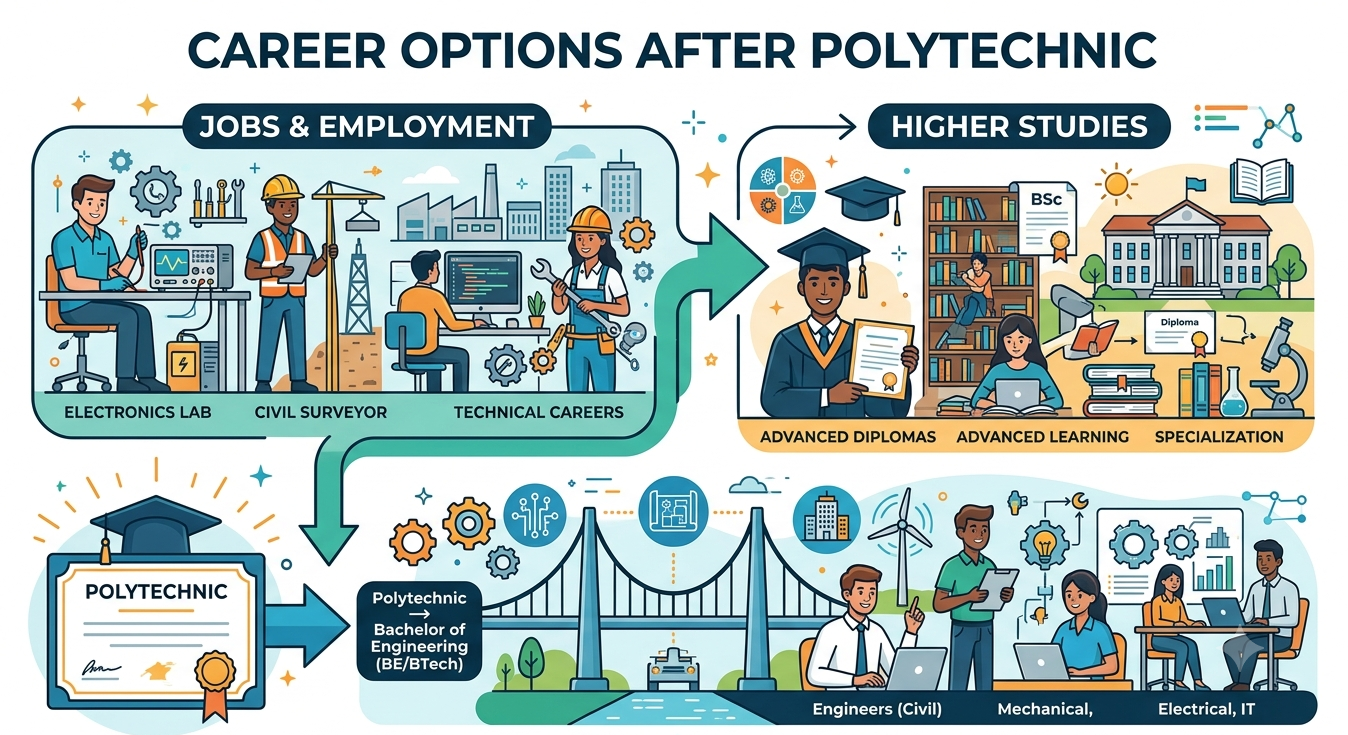
A polytechnic diploma can be an important first step in pursuing a career in technology and engineering. However, getting your diploma does not require you to start working right away. You can opt to continue your engineering education through lateral entry into a B.Tech program, pursue higher study, or begin working, depending on your interests and professional aspirations.
The best option for diploma holders depends on their job goals. While some students might desire to increase their technical credentials before joining the workforce, others might choose to obtain real-world job experience right away.
Here are some employment options for those who have completed or are presently pursuing a polytechnic diploma.
What Can You Do After Polytechnic?
After completing a polytechnic diploma, students generally have three major options:
- Start working in a technical role
- Pursue higher education
- Join a B.Tech programme through lateral entry
There is no single right option for everyone. Your decision should depend on your career goals, financial plans, interest in further education and the kind of professional role you want to pursue.
Start Your Career After Polytechnic
A polytechnic diploma is designed to provide students with technical and practical knowledge. This can help diploma holders apply for entry-level positions in industries related to their field of study.
Depending on your specialisation, you can explore roles in areas such as:
- Manufacturing
- Construction
- Automotive
- Electrical and electronics
- Computer and IT services
- Maintenance
- Production
- Quality control
- Technical support
- Infrastructure
For example, a person with a diploma in civil engineering would consider jobs in building, surveying, or infrastructure, whereas someone with a diploma in mechanical engineering might consider prospects in manufacturing or production.
You may acquire practical experience, professional skills, and industry exposure by starting a career right away. Students should, however, also consider whether a diploma is enough for their career goals in the future.
Continue Your Education Through B.Tech
After getting your diploma, completing a B.Tech might be a worthwhile choice if you wish to further develop your understanding of engineering and increase your employment options.
Lateral entry is one of the main benefits for qualified diploma holders. Subject to the university’s admissions policies, qualified candidates may enroll immediately in the latter stages of the B.Tech program rather than beginning it in the first year.
This enables diploma holders to expand on the technical expertise they have previously acquired during their polytechnic education.
At Bahra University, the B.Tech LEET (Lateral Entry) programme is specifically available for diploma engineering students. The university currently lists B.Tech LEET options in Computer Science Engineering, Mechanical Engineering, Electrical & Electronics Engineering, Civil Engineering, Automobile Engineering, CSE Cloud Computing and CSE Cyber Security.
Who Can Apply for B.Tech LEET at Bahra University?
Students applying for a B.Tech LEET must hold a Diploma in Engineering from an accredited state board with at least 45% of the possible points, according to Bahra University’s current admissions page. For applicants in the reserved category, the stated minimum is 40%.
Scholarships for Lateral Entry Students at Bahra University
Students taking B.Tech admission through lateral entry at Bahra University can explore the university’s available merit-based scholarships.
| Percentage in Lateral Entry | Tuition Fee Scholarship |
| 90% or above | 40% |
| 80%–89.99% | 30% |
| 70%–79.99% | 20% |
| 60%–69.99% | 10% |
Explore Emerging Areas of Engineering
Technology is changing the way industries work today, creating new engineering opportunities beyond traditional engineering. If you are interested in technology and hold a diploma in an engineering-related discipline, you might want to look into specializations relating to:
Science of Computers
Careers in software development, programming, databases, web technologies, and other IT-related fields can be attained through computer science engineering.
Cloud Computing
Cloud computing is now an important part of modern IT architecture. If students have an interest in cloud platforms, computer infrastructure, and related technologies, they should choose this career.
Cyber Security
Safeguarding networks and data has become important as businesses are depending more and more on digital technologies. Students interested in network security, ethical hacking, and information protection might find opportunities in cyber security.
In addition to typical engineering courses, Bahra University’s B.Tech LEET program now includes CSE Cloud Computing and CSE Cyber Security.
Build Skills Alongside Your Qualification
Whether you choose a job or higher studies after polytechnic, developing additional skills can improve your career readiness.
For technical careers, these may include:
- Computer programming
- CAD and design software
- Data analysis
- Technical documentation
- Problem-solving
- Communication
- Project management
- Industry-specific software
- Digital tools and technologies
The engineering field you choose determines the skills you need. For instance, a student of computer science may concentrate on programming and database technology, but a student of civil engineering might benefit from studying pertinent design and planning tools.
Seminars, guest lectures, industry contacts, extracurricular activities, tests, and contests are just a few of the skill-development opportunities available to Bahra University students.
Look for Internships and Industry Exposure
Academic qualifications are important, but practical experience can help students understand how their technical knowledge is applied in professional environments.
Internships can help you:
- Understand workplace expectations
- Gain practical experience
- Develop professional communication
- Work on real projects
- Build your resume
- Understand different career roles
Internships, apprenticeships, industry collaborations, career counseling, and sector-specific training are all part of Bahra University’s placement and career ecosystem. Also, the Career Center offers assistance with resume preparation, practice interviews, job postings, workshops, and career counselling.
What About Jobs After B.Tech?
If you decide to continue from a diploma to B.Tech through lateral entry, you can explore engineering and technology roles after completing your degree.
The opportunities will depend on your specialisation, skills, experience and the type of industry you want to enter.
For example:
| Engineering Discipline | Key Career Areas |
| Computer Science | Software, IT, Development |
| Mechanical Engineering | Manufacturing, Production, Automotive |
| Civil Engineering | Construction, Infrastructure, Project Management |
| Electrical & Electronics | Electrical Systems, Electronics, Automation |
| Automobile Engineering | Automotive, Manufacturing, Vehicle Technology |
| Cloud Computing | Cloud Infrastructure, IT Services |
| Cyber Security | Network Security, Information Security, IT |
These are broad career areas, and specific job roles will depend on your qualifications and skills.
Career Support Can Make a Difference
Don’t just think about the degree while deciding where to complete your B.Tech after polytechnic. Think about the resources that might assist you in making the move from school to the workforce.
The Career Center at Bahra University offers post-placement assistance, résumé and interview preparation, industry connections, career counseling, skills-development programs, and campus recruiting.
According to the university’s placement statistics, 80% of B.Tech students were placed, and more than 350 businesses had visited for placements.
Students should take into account the most recent program-specific placement statistics while making their choice because placement numbers might differ depending on batch and eligibility.
How Do You Decide Between a Job and Higher Studies?
If you are unsure whether to start working or continue studying, consider your long-term goals.
Choose a job if:
- You want to start earning immediately.
- You want practical industry experience.
- You are confident that your diploma qualification meets your career goals.
- You want to understand the industry before pursuing further studies.
Consider B.Tech if:
- You want a bachelor’s degree in engineering.
- Your preferred career roles require or favour a degree qualification.
- You want to build deeper technical knowledge.
- You are interested in progressing towards specialised engineering roles.
- You want to keep postgraduate study options open later.
There is also no rule that says your decision has to remain the same forever. A student can begin working after a diploma and consider higher education later, depending on eligibility and career requirements.
Why Consider B.Tech Lateral Entry at Bahra University?
Bahra University’s B.Tech LEET program offers diploma holders the chance to expand on their current technical knowledge if they choose to pursue further engineering studies.
Computer Science Engineering, Mechanical Engineering, Civil Engineering, Electrical & Electronics Engineering, Automobile Engineering, CSE Cloud Computing, and CSE Cyber Security are just a few of the fields from which students can select.
The university also provides access to labs, classrooms, workshops, sports facilities, and other campus resources, while its skill-enhancement programs feature guest speakers, seminars, and industry engagements.
For students thinking about their career beyond graduation, the university’s centralized Career Center offers support in areas such as career counselling, recruitment, internships, resume preparation and interview skills.
Make Your Polytechnic Diploma the Beginning, Not the End
Your career path doesn’t have to end with a polytechnic diploma, but it might provide you with a valuable base. You can continue your engineering education through B.Tech lateral entry, start working, acquire specialized skills, or seek further study.
A B.Tech LEET may be worthwhile if your goal is to become an engineer and increase your technical and professional prospects. Depending on their interests and prior education, qualified diploma holders at Bahra University can select from a variety of B.Tech lateral-entry specializations.
The most important aspect is to consider where you want to go in a few years and select the path that will get you there. The abilities, experiences, and decisions you make following polytechnic can have a significant impact on your career, regardless of whether you choose to continue your education or enter the profession.
