Beyond Coding: How AI Is Shaping the Future of Engineering Careers
Ask a few engineering students what worries them, and AI comes up fast. Will it write the code? Will it take the job?
Fair questions. Here’s our honest take. AI is changing engineering. It isn’t ending it. The engineers who do well will be the ones who know how to work with it.
Here’s what that looks like, and how we help students get there at Bahra University, Shimla.
AI is already part of the work
AI isn’t a far-off idea. It’s in the tools engineers use right now. Software teams use it to speed up routine tasks. Manufacturers use it to catch faults early. Planners use it to study data and design smarter projects.
And it isn’t limited to computer science. A mechanical engineer might use AI in design and quality control. A civil engineer might use it when planning a project. The tools differ. The idea is the same. Let the machine handle the repetitive part so the engineer can focus on judgement.
What AI can’t do for you
AI can draft code. It can crunch numbers in seconds. What it can’t do is decide which problem is worth solving.
It can’t sit with a client who isn’t sure what they want. It can’t take responsibility when something goes wrong. Those parts stay with people. Problem-solving, communication, ethics and good judgement are still what employers ask for.
New careers, new roles
AI has opened up roles that barely existed a few years ago. AI engineer, machine learning engineer and data scientist are the obvious ones. Cyber security analyst and cloud security specialist are growing too. So are business analyst, automation specialist and AI product associate.
The common thread is that these jobs go beyond writing code. They need you to understand data, systems and the business problem behind them.
Engineering at Bahra: courses and what you get
Straight to the point. Here’s what you can study.
| Course | What it’s about |
|---|---|
| B.Tech CSE | Programming, data structures, algorithms, operating systems, networking and software development. A flexible base. |
| B.Tech AI & Machine Learning | Teaching systems to learn from data and make decisions. |
| B.Tech Data Science | Turning large amounts of data into useful insight. |
| B.Tech Cyber Security | Finding weak spots in systems and protecting them. |
| B.Tech Cloud Computing | Building and running flexible, scalable digital systems. |
| B.Tech Mechanical Engineering | Machines, manufacturing, design and production. |
| B.Tech Civil Engineering | Construction, buildings and infrastructure. |
| M.Tech | Postgraduate study in engineering. Ask the admission office which specialisations run for your intake. |
Getting in. For B.Tech, you can apply with a JEE Main score. Most programmes, CSE included, ask for at least 45% in 10+2 with Physics, Chemistry and Mathematics.
What you get on top of the degree.
Hostel facilities, and scholarships worth more than ₹25 crore given so far across merit, sports and other categories.
How Bahra prepares you
Industry partnerships with IBM, Microsoft, HCL and KPMG, so the curriculum matches what companies use.
Modern labs, so practical work is part of the routine.
Hackathons, internships and live projects while you study.
Certifications and mentoring.
Placement support through the Placement Cell and Career Development Centre.
Our Alpha School offers specialised programmes in AI & Machine Learning, Data Science, Cyber Security and Cloud Computing, alongside a strong core CSE programme. Mechanical and Civil Engineering are part of the School of Engineering too.
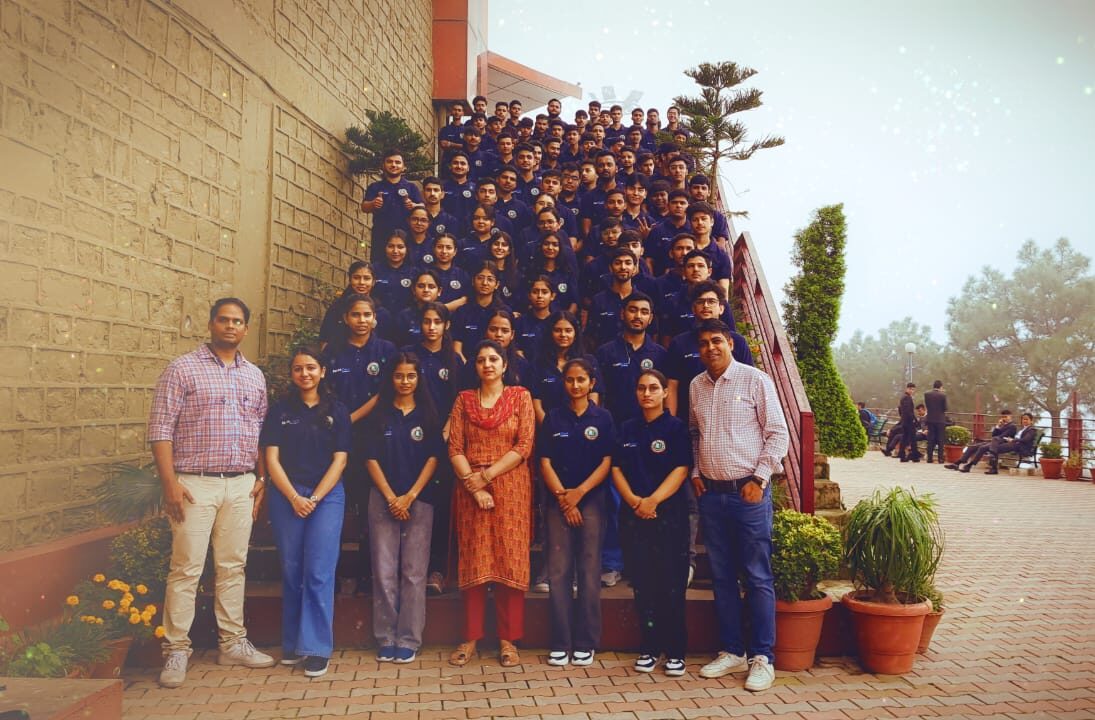
The curriculum is shaped with input from industry, and we have partnerships with IBM, Microsoft, HCL and KPMG. So what you learn lines up with what companies actually use.
You learn by doing. There are modern labs, hackathons, internships and live projects. You also get certifications and mentoring. The idea is to try things while you’re still learning, not two years later.
Do the results show up?
Numbers never tell the whole story. They do tell some of it.
This season, Josh Technology Group made an offer of 50 LPA for an SQA role. Flipkart offered 30 LPA. JTP Japan and Infosys each came in at 20 LPA. Twelve companies offered around 10 LPA, and 112 hired in the 5 to 10 LPA range. That spread is the useful part, because it shows offers reached many students.
Some students got internship-to-job offers. Mozo Hunt took five students for a six-month internship at ₹10,000 a month, then made full-time offers of 9 to 12 LPA. MindSeekers Technology hired two students at ₹25,000 a month for four months, with an 8 LPA offer after.
In CSE, nine students were placed this cycle. The highest offer was 12 LPA, and the average CTC was 6.56 LPA.
Habits worth building now
Wherever you study, a few habits help. Learn the basics well before you lean on AI tools. Build small projects and actually finish them. Use AI to move faster, but check what it gives you. Join hackathons and clubs, because working with people matters as much as the tech.
Final thoughts
AI isn’t the end of engineering careers. It’s a change in what the work looks like.
Engineers who understand the tools, and who can think and communicate well, will stay in demand. If you want to build that kind of foundation, we’d love to see you at Bahra University, Shimla. And if fees are on your mind, ask our admission team about scholarships. We’ve given out more than ₹25 crore so far.
